
Why Collaborations Are Uncommon at the brand: and The Manner in Which They’re Approached
Within a landscape where brand partnerships have become a consistent revenue lever, The Row has taken the opposite path. Mary-Kate and Ashley Olsen built the label around a philosophy of restraint — a value that extends directly into how, or whether, the brand partners with outside partners. Whereas other houses release capsule lines with sneaker brands, artists, or competing maisons every quarter, The Row has put out scarcely any. Such scarcity is no accident — it’s a intentional business and creative strategy that shapes how the entire house operates, spanning everything from its runway shows to the design of the row bags anchoring its accessories line.
The rarity of collaborations at The Row makes sense when you look at its beginnings, its pricing structure, and the brand’s enduring place within high-end fashion.
Rather than creating a trend-fueled name, The Olsens worked toward something resembling a design studio: quiet, carefully thought-out, slow-moving on purpose.
The Core Ethos: Low-Key Refinement Before It Had a Name
The Row launched in 2006, years before “quiet luxury” became a marketing buzzword. From the beginning, the brand prioritized construction quality, fabric sourcing, and understated silhouettes over logos or seasonal gimmicks. This ethos naturally resists the collaboration model, which usually depends on visibility, novelty, and a limited-time sense of urgency.
Brand partnerships tend to work best for names that flourish through pop-culture relevance — picture limited sneaker launches or street-style crossovers that vanish within minutes. The Row’s customer base, by contrast, values consistency. Someone holding three or four the row handbags in her closet has no interest in a co-branded curiosity; rather, they’re after a piece that folds quietly into a wardrobe developed over years instead of mere seasons.
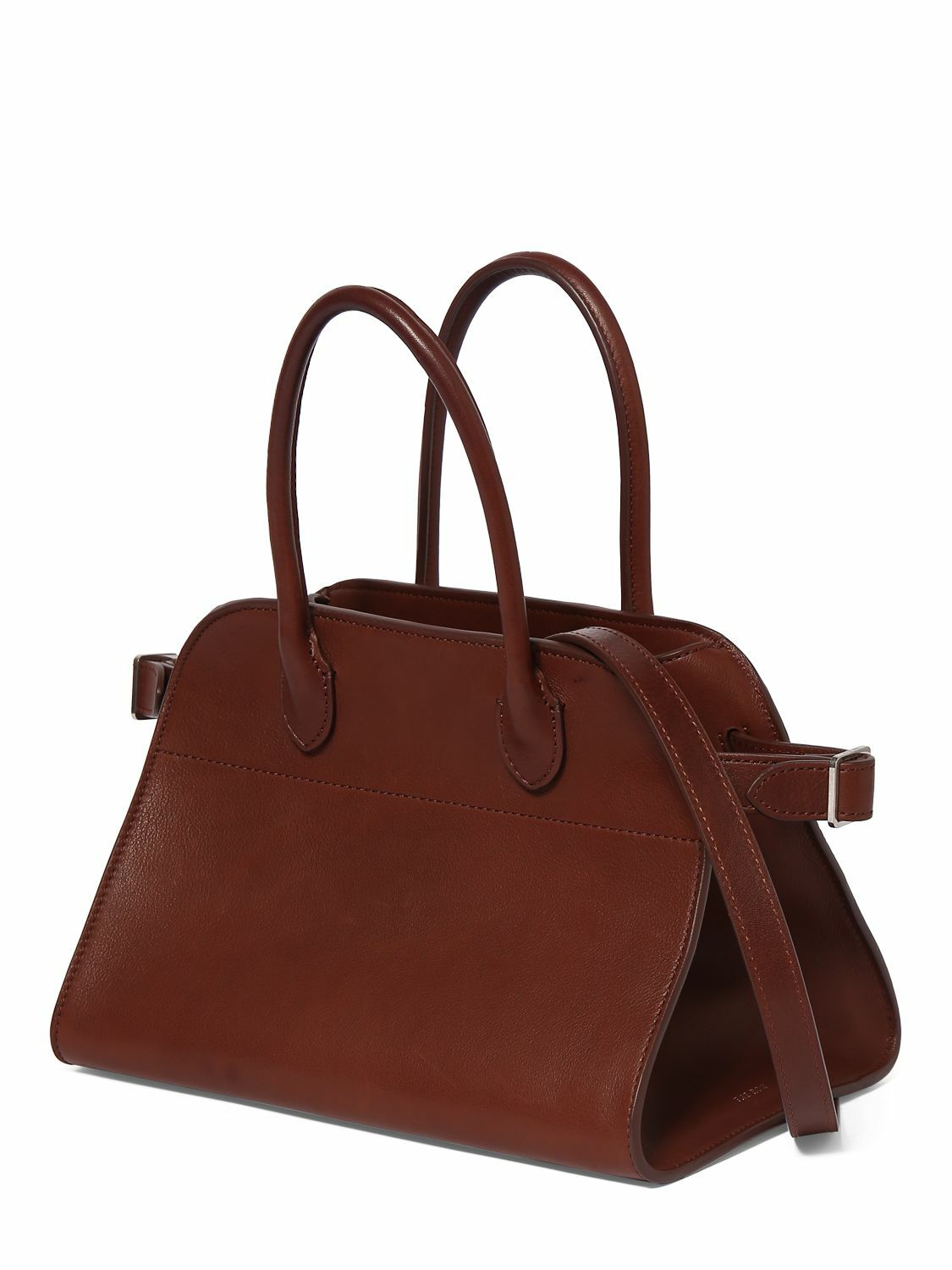
This is one reason why the overview of row bags conversation among resellers and stylists rarely includes limited-run releases. The brand’s structural approach to bags — the Margaux, the Bourse, and the Soft Lock — was built to remain enduring instead of trend-driven. Permanence and collaboration are, in many ways, structurally at odds.
The label’s runway events, a fixture of the official schedule since 2015, still manage to avoid the theatrical staging and celebrity-heavy front-row show so often tied to collab reveals found at other the row new tote bags labels. The staging remains as controlled as the product.
Why Saying No Is Simply Good Business Sense
Scarcity has monetary significance, and The Row is attuned to this more keenly than most contemporary houses. Overly frequent brand partnerships corrode a brand’s rarefied status. Should the marketplace gets saturated with limited editions competing for attention, resale values on signature products can weaken. By maintaining a tight and consistent product lineup, The Row has instead safeguarded the secondhand demand of its core handbag lines.
This has real, tangible implications: the top-performing row bags — predominantly the Margaux in its various sizes, together with the Bourse and Soft Clutch — keep their resale strength precisely because they are never reissued in twenty colorways a year or altered to feature a guest designer’s branding fixed to the hardware. A buyer purchasing the row bag today can confidently anticipate that same shape to remain available, with little alteration, three years from now.
The pricing strategy also explains this. The line’s bags generally fall within the $2,000 to $6,000+ price band based on size, leather, and hardware finish. At that cost level, shoppers pay a premium for longevity and design integrity, instead of a piece of fleeting cultural buzz. A high-profile partnership would arguably undercut precisely what justifies the elevated price.
Financially, this approach further cuts down manufacturing complexity. Partnerships demand reworked licensing terms, co-manufacturing logistics, and advertising costs shared across dual identities. Its compact, tightly managed operation — reportedly with limited retail doors and a purposefully limited wholesale footprint — isn’t structured for this type of scaling.
The Rare Partnerships That Did Occur
The Row hasn’t been absolute in its refusal to partner with others, but the instances are few and telling. Worth mentioning, it has, on occasion, engaged in footwear and select material sourcing partnerships instead of loud, co-branded apparel collections. Such efforts usually remain quiet enough that those browsing the row fashion casually frequently remain unaware that a collaboration took place.
Compared to its peers, this is a clear departure. Fashion houses such as Louis Vuitton or Fendi have carried out several headline-making artist and designer partnerships in just one year. The Row’s approach, by comparison might see just one quiet partnership every few years — and when it happens, the brand rarely amplifies it with heavy marketing.
This shortage of collab reveals also has a direct effect on shopper demand within a row sale. Since there isn’t a shifting lineup of limited releases to pursue, sale periods focus buyer attention squarely on core items — namely the tote bag, the Margaux, and its signature outerwear — rather than diluting attention across novelty releases.
This consistency has also brought more predictability to resale and consignment shopping. Buyers searching for where to buy the row Margaux bag on secondary markets can usually count on value markers remain linked to an unchanging design approach instead of shifting collaboration-driven hype waves.
Why This Matters Especially for the Handbags
The scarcity of collaborations has allowed the label’s design team to devote its attention to refining a select few shapes rather than endlessly producing new ones for marketing cycles. Introduced in 2016, the Margaux is, ten years later, still among the label’s most requested styles — a rare feat in an industry where “it bags” typically cycle out within two or three years.
The row tote bag styles follow the same logic. Rather than releasing a new tote silhouette every season, The Row has iterated slowly, refining dimensions, hardware and strap elements, or leather treatments while keeping the essential design intact. This is a clear break from brands that depend on collaboration-driven tote releases to drum up seasonal buzz.
Presented below is a quick comparison of how The Row’s approach to bag releases diverges from a conventional collaboration-driven luxury competitor.
| Consideration | The Row | Standard Collaboration-Heavy Luxury Label |
|---|---|---|
| How often collaborations occur | Uncommon — sporadic partnerships that stay under the radar | Multiple per year, often high-profile |
| How long a core bag shape stays in production | Often a decade or longer (e.g., Margaux since 2016) | Typically 2–3 years before redesign |
| Promotional style | Minimal, understated, limited press amplification | Heavy campaign push, influencer seeding |
| Resale value stability | Fairly stable, thanks to a restrained release schedule | Can fluctuate with each new collaboration drop |
| Where the product is sold | Selective, limited doors and e-commerce presence | Broad wholesale and multi-brand retail exposure |
This table illustrates why shoppers researching top row bags often come across a smaller, steadier catalog compared to competitors — and why that stability is seen as an asset rather than a drawback.
What This Means for Shoppers in 2026
For anyone buying from The Row in 2026, the key point is straightforward: don’t anticipate a collaboration-driven release calendar, and plan purchases around core pieces rather than holding out for limited editions. Its e-commerce site along with select flagship stores continue to be the safest bet for authentic stock, particularly for sought-after pieces such as the Margaux.
Given that manufacturing volumes are purposely limited, the most in-demand sizes and leather options within the row bag range can be depleted and take time to restock. Shoppers serious about acquiring a specific piece should monitor official channels directly rather than depending exclusively on third-party resellers, especially when trying to figure out where to buy the row Margaux bag in a specific size or leather.
When Row sales do happen, they generally center on ready-to-wear and select accessories rather than deep discounts on the most in-demand bag styles, reflecting the brand’s broader resistance to anything that might dilute perceived value. This is in line with how the brand handles all promotional activity — sparingly and with restraint.
Ultimately, the scarcity of collaborations tied to The Row isn’t a marketing gap; it runs through everything the brand stands for. Amid a marketplace flooded with co-branded clutter, opting out has turned into one of The Row’s most singular — and most understatedly successful — calculated moves.